
Don't have time to read? Listen instead.
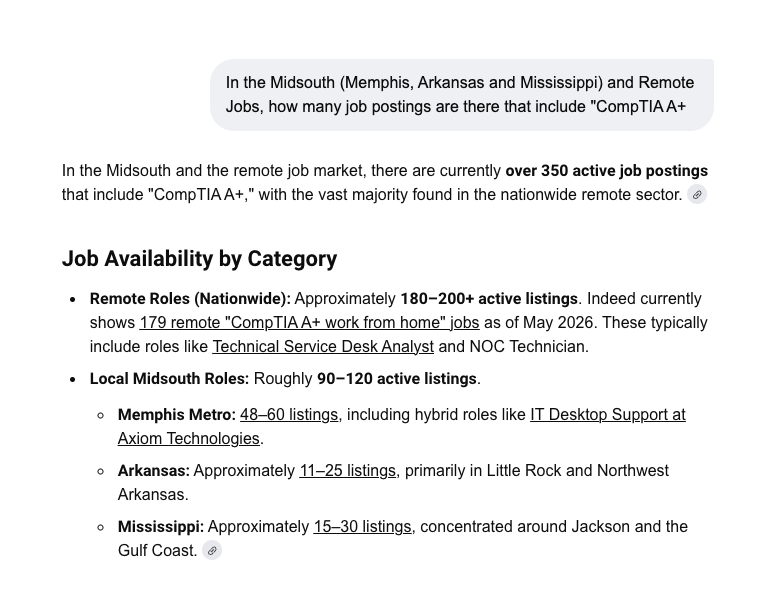
Scroll through job postings almost anywhere right now and you’ll notice something pretty quickly:
CompTIA A+
Network+
Security+
Different employers.
Different industries.
Same message.
Industry-recognized certifications still matter.
Technology Skills Are No Longer Optional
 This isn’t just about “IT jobs” anymore.
Today, almost every role relies on technology in some way.
Remote work.
Cloud platforms.
Video meetings.
Connected systems.
VPN access.
Shared drives.
Multi-factor authentication.
Even jobs outside traditional IT now expect workers to be comfortable troubleshooting devices, navigating software, and adapting to changing tools.
And when something breaks?
There’s a growing expectation that employees can solve at least part of the problem themselves.
That shift changed everything.
The Workplace Changed Faster Than Most People Expected
During the height of the COVID-19 pandemic, companies across the country had to move operations online almost overnight.
Employees suddenly needed to know how to:
- Configure devices
- Connect remotely
- Troubleshoot internet and software issues
- Secure company data
- Navigate unfamiliar platforms
Some adapted quickly.
Others realized how dependent modern work had become on technology skills they were never formally taught.
That realization never really went away.
The Job Postings Keep Saying the Same Thing
Across job boards, employers continue listing certifications like:
- CompTIA A+
- Network+
- Security+
…because they help validate that candidates can work within modern technology environments.
Not just use technology.
Understand it.


Recent postings tied to:
- IT Support
- Help Desk
- Desktop Support
- Systems Administration
- Infrastructure Support
- Cybersecurity
…continue referencing certifications as:
- Required
- Preferred
- Or strongly desired
The Salary Conversation Matters Too
Recent market data tied to CompTIA A+ and Network+ related roles showed salary ranges around:
$22–$37 per hour
With average compensation near:
$29/hour
That range varies based on experience, specialization, and employer—but the larger point is clear:
Technology skills have value.
Verified skills have even more value.
Why Certifications Continue Showing Up
Hiring technology talent is difficult. 
Job titles vary.
Experience varies.
And “good with computers” can mean almost anything.
Certifications create a common language employers recognize.
They help validate that someone:
- Understands technical concepts
- Can troubleshoot systems
- Has hands-on knowledge
- Can adapt to modern technology environments
- Has committed to learning
That matters when employers are sorting through stacks of applications.
What This Means for Tech901 Alumni
One of the biggest mistakes professionals make is treating certifications like a one-time accomplishment.
Technology doesn’t stop evolving.
Neither should your skillset.
Most industry certifications require continuing education or renewal every few years to stay active and relevant.
That’s intentional.
Technology changes fast—and employers want to know your skills are staying current too.
At Tech901, our pathways are designed to build on each other.
Many CompTIA certifications stack together, meaning when you earn a higher-level certification, it can automatically renew earlier certifications in your pathway.
For example:
- Advancing from A+ to Network+
- Then from Network+ to Security+
…can help extend the validity of previous certifications as you continue growing your skillset.
That means you’re not just collecting certifications.
You’re building a professional foundation that evolves with your career.
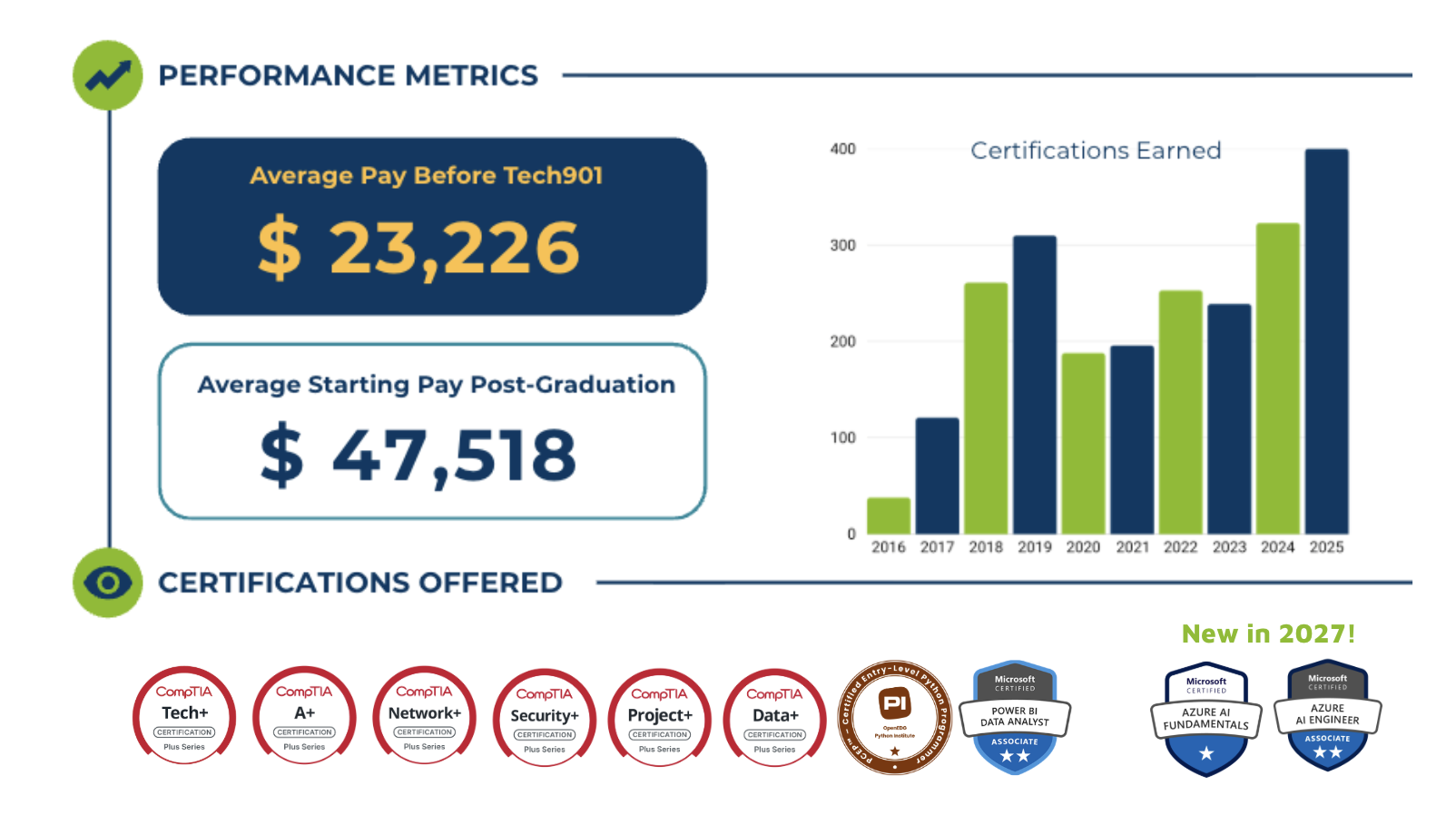
That’s why many Tech901 graduates continue building:
- Tech+
- A+
- Network+
- Security+
- Data+
- Python Programmer PCEP™
- AI certifications
Each certification builds on the last.
Each one strengthens credibility.
Each one expands opportunity.
The goal isn’t just to earn one certification.
It’s to build a skillset that keeps growing with you.
Take the Next Step
Already completed a Tech901 course?
Your next certification could be the credential that separates you from the next stack of applicants.